
The builders have left, the new kitchen looks finished, and yet every surface you touch leaves a pale film on your fingers. A week later it is back on the shelves you wiped, and the AC blows a faint grey haze when it starts. That is construction dust, and it behaves differently from the dust you know. This guide explains where it goes, why it so often ends up in the air conditioning, and in which order to clean so you do not end up doing it twice.
Why is cleaning after a renovation different from a normal deep clean?
Because the dirt is finer, there is far more of it, and it is everywhere at once. A normal deep clean removes build up from use: grease in the kitchen, limescale in the bathroom, dust where people do not reach. A post-renovation clean removes a layer that was produced inside the home in a few weeks, by cutting, sanding, drilling and mixing.
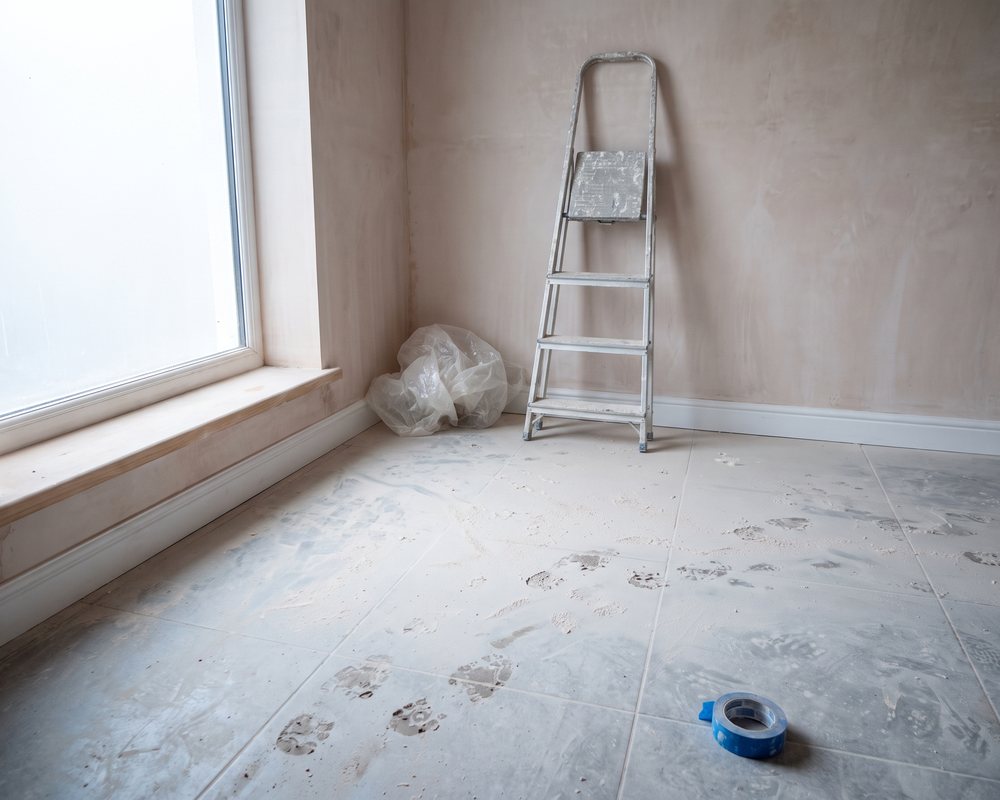
That layer is ground mineral material from plaster, gypsum board, cement, tile and stone. It is fine enough to float for a while, settle slowly and work its way into places that ordinary dust rarely reaches: inside closed cupboards, into hinges and drawer runners, into sliding door tracks, behind skirting, onto the tops of door frames and into the AC. On top of it sit residues that a normal clean never meets: paint splashes, silicone smears, grout haze on tiles, adhesive from protective film and tape, and cement on frames.
What is construction dust, and why does it not simply wipe off?
It is abrasive, it smears when wet, and it keeps coming back for days. Each of those needs a different answer.
Household dust in Dubai is already largely mineral. A study of indoor dust from Dubai homes measured high levels of calcium, potassium, magnesium, aluminium and iron and attributed them to the geology of the region and transported dust1. Construction dust adds more of the same kind of material, freshly ground and sharp edged. Wiped dry across glass, lacquer, stainless steel or polished stone, it acts like a very fine abrasive. That is why the first pass is vacuuming with a fine filter, not a dry cloth.
Wet, it turns into a thin paste. Gypsum and cement dust mixed with too much water leaves streaks that dry white and look worse than before. The working rule is: vacuum first, then wipe with a damp cloth that is rinsed often, then a final clean pass. And because the finest fraction stays airborne for a while and settles later, a home that looks clean on day one usually shows a light film again a few days later. Planning for that second, lighter pass is honest; pretending it will not happen is not.
Why does construction dust end up in your AC?
Because the AC breathes the room. Every split, ducted unit and fan coil draws room air back through a return grille and a filter, passes it over the cooling coil and blows it out again. If the system ran while someone was sanding a wall or cutting tiles, it pulled that dust in for hours a day.
The filter catches part of it and clogs. What passes the filter lands on the coil, which is wet from condensation for much of the year in Dubai, so the dust sticks and forms a paste. Some of it settles in the condensate tray and can slow the drain. In ducted systems and fan coils with a return path above the ceiling, it also settles in the return side.
This is not a theory invented by cleaning companies. The NADCA standard for HVAC cleaning lists construction debris among the conditions that justify cleaning a system2. The US Environmental Protection Agency, which otherwise does not recommend routine duct cleaning, names ducts “clogged with excessive amounts of dust and debris” as a reason to clean them, and advises asking the provider to “clean cooling coils and drain pans” as well3.
So after a renovation with the AC running, the AC is part of the clean, not an optional extra. Whether the ducts need cleaning is decided by looking inside them after the units are done. Our guide on whether AC duct cleaning is worth it explains when that step pays off and when it does not.
What should happen before the builders leave?
A good post-renovation clean starts while the contractor is still on site. Three requests cost the contractor little and save you a lot of cleaning.
First, ask for the AC to be protected. Ideally the system is off in the rooms where dust is produced. Where cooling is unavoidable, return grilles should be covered and filters checked and replaced often. Second, ask for all debris, offcuts, empty buckets and packaging to be removed, not stacked on the balcony. Third, walk through the home together and write a snag list before the final payment: paint touch ups, chipped tiles, missing silicone, grout gaps, scratched glass, doors that do not close.
That list matters because cleaning and snagging are different jobs. A cleaning team removes residues from finished surfaces. It does not repaint, regrout, reseal or repair, and it should not be expected to hide work that was left unfinished.
In which order should a post-renovation clean happen?
Top to bottom, dusty work before fine work, AC before everything else. The order is the difference between cleaning once and cleaning twice.
| Step | What happens | Why in this order |
|---|---|---|
| 1 | Builders’ debris out, last trade finished | Anything left behind produces new dust |
| 2 | AC inspected and cleaned: filters, coil, condensate tray and drain, blower, grilles | Opening the units releases dust that then settles on the rooms |
| 3 | Ceilings, light fittings, vents, tops of doors, frames and wardrobes | Dust falls downwards |
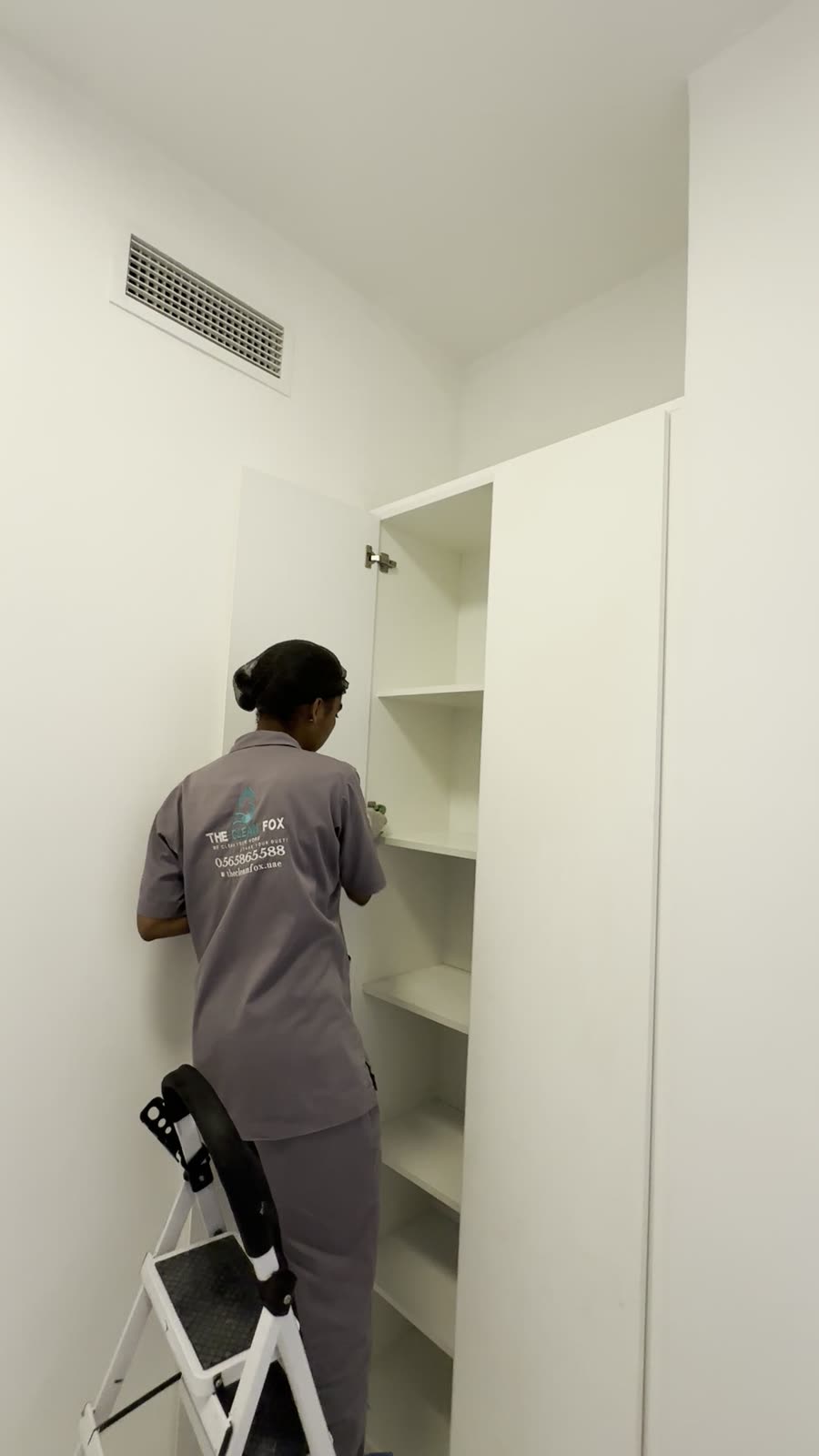
| 4 | Cupboards, wardrobes and drawers inside and out, runners and hinges | Construction dust gets into closed spaces |
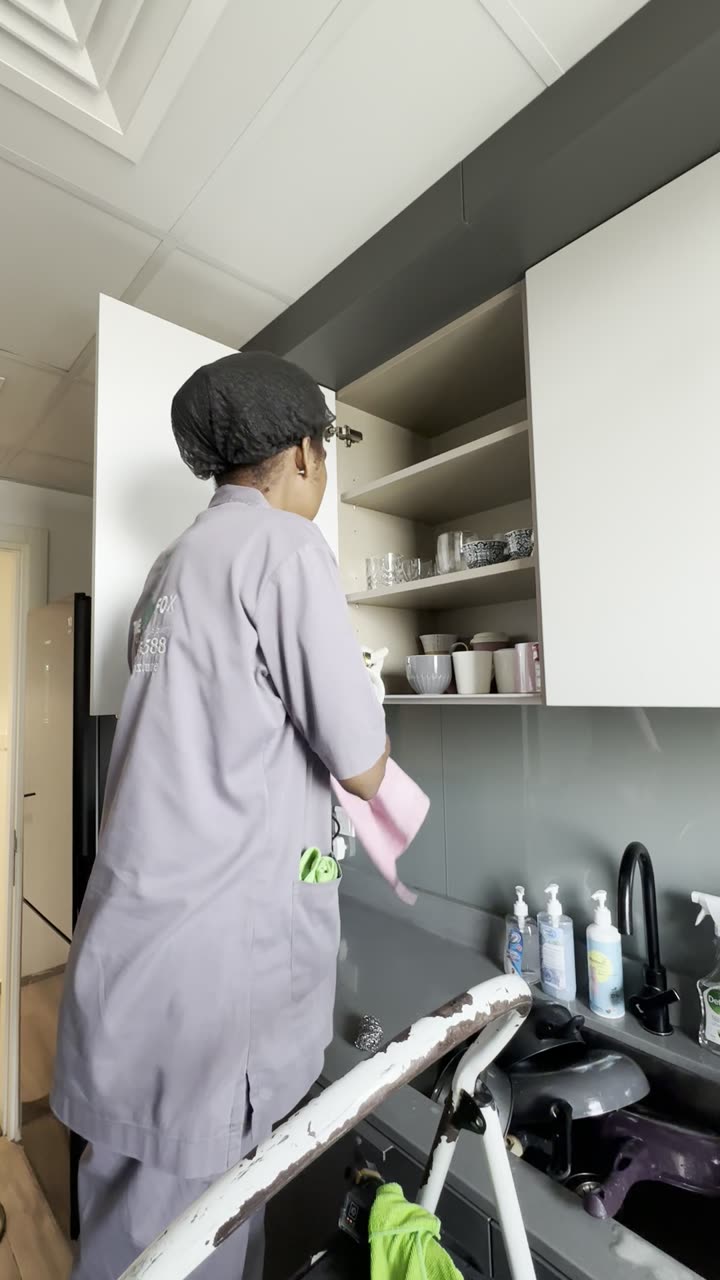
| 5 | Kitchen: residues off worktops, splashbacks, appliances, sink and taps | New surfaces, gentle products, no abrasive pads |
| 6 | Bathrooms: grout haze, silicone smears and adhesive off tiles, glass and fittings | Same care, new grout and silicone may still be curing |
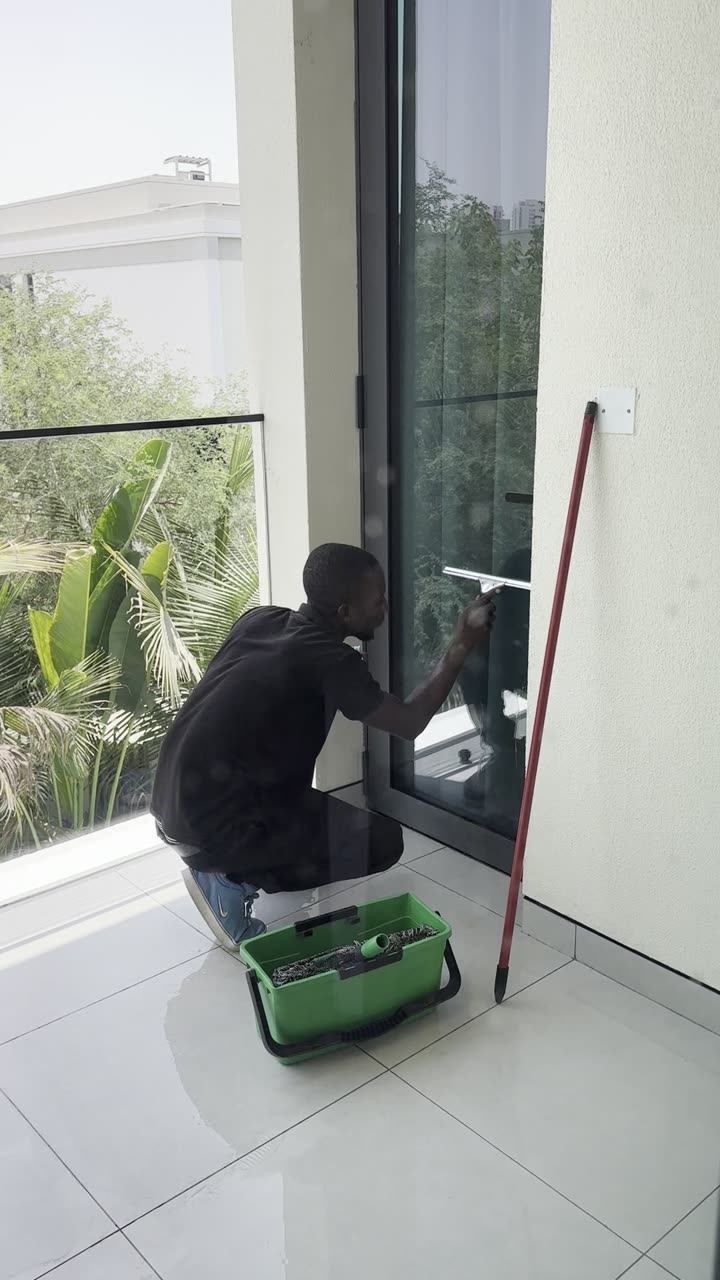
| 7 | Windows, frames, sills and sliding door tracks | Tracks hold the coarse dust that was swept towards them |
| 8 | Skirting, doors, switches and sockets | Last contact surfaces before the floor |
| 9 | Floors: vacuumed first, then washed, rinse water changed often | Everything above has dropped its dust by now |
| 10 | Light second dust pass a few days later | The finest dust settles after the first clean |
Two cautions run through the whole table. Fresh grout, silicone, paint and floor finishes may need time to cure before they meet water or cleaning products, so ask your contractor and follow the manufacturer’s instructions. And natural stone, new timber and some worktops react to acids and strong alkalis, so the product is chosen per surface, not per room. Steam helps on tiles and grout that have fully cured, and our page on steam cleaning in Dubai explains where it works and where it does not.
Dubai Municipality’s indoor air guideline gives the parts of the AC that collect this dust their own intervals: coils and condensate pipes at least every six months, trays at least every month and based on condition4, and it advises to “clean drain pans often and ensure a proper slope to keep water draining”4. After a renovation, the condition is clear enough to start there. Our AC cleaning in Dubai is done by our own technician on the same day as the rest of the clean.
What needs to be done before you move in?
Everything you will touch, store food in or sleep near, plus the AC. Moving furniture into a dusty home seals the dust under it and into it.
- AC: units cleaned, filters clean or new, drains tested before and after, ducts inspected if the system ran during the works.
- Kitchen: cupboards and drawers inside, where plates and food will go, fridge and oven inside, extractor hood and filter.
- Bathrooms: glass, tiles, fittings, drains running freely, extractor fan grilles.
- Wardrobes: inside, rails and shelves, before clothes go in.
- Windows and tracks: so they can be opened without grinding sand into the seals.
- Floors: last, after everything above is done.
- A final walk through with good light at a low angle, which shows remaining film on floors and glass.
If you are moving into a newly built or renovated rental, our move-in inspection checklist helps you record the state of the home before you take the keys. Soft furnishings such as a new sofa or rugs are best brought in after the clean. If you renovated around existing ones, they will need their own clean, and they should go in last.
What is not part of a post-renovation clean?
Anything that is building work, repair or disposal rather than cleaning. Saying this before the job avoids an argument on the day.
- Removal of construction debris, rubble, offcuts and packaging in bulk. That is the contractor’s job.
- Painting, filling, regrouting, resealing or polishing out scratches.
- Removing paint or adhesive from porous stone, unsealed wood or fabric where it has soaked in. We test, and if it does not come off safely, we tell you.
- AC repairs or gas refills. These are a separate job, agreed with you first.
- Pest control, which needs its own approval in Dubai.
- Guarantees that every mark will disappear. Some residues on some materials are permanent, and we would rather say so before we start.
How do you brief a cleaning company after a renovation?
Tell them what was done, not just how big the home is. A post-renovation quote depends on the works as much as on the floor area.
Useful details to send on WhatsApp: which rooms were renovated and what was done in each (tiling, plastering, joinery, new kitchen, new flooring), whether the AC ran during the works, whether the contractor has finished and removed the debris, which surfaces are new natural stone, timber or special finishes, and whether furniture is already in. Photos of a typical room, the kitchen, the bathrooms and one AC grille close up tell more than a description.
With that, we agree one fixed price before we start, covering the home and the AC, with no extra charges on the day. Our home deep cleaning in Dubai page describes the wider service this sits within, and if you want to compare it with an ordinary deep clean, see what a home deep clean includes.