

You set the AC to 22 °C, the room feels cool, and yet the bedsheets feel clammy, the bathroom mirror never quite clears and the back of the wardrobe has started to smell. That is not bad luck with the building. It usually means the air conditioning is cooling the air without drying it, and the reason is almost always one of six things. Most of them you can find yourself in an evening with a cheap hygrometer.
What humidity level is normal inside a Dubai apartment?
Below 60 percent relative humidity, and ideally below 50. That is not our rule of thumb, it is Dubai Municipality’s. Its Technical Guidelines for Indoor Air Quality give a comfort range of 20 to 60 percent and note that humidity should never exceed 56 percent at 27 °C1. The same document’s section on moisture and mould says to “keep relative humidity below 60% (50%, if feasible, to control dust mites)”1.
The guideline’s comfort range for temperature is 22.5 to 25.5 °C1. That matters for the diagnosis below: if you need to set the AC far colder than that just to make the room feel dry, the system is compensating for a fault rather than doing its normal job.
Why does Dubai air carry so much water in the first place?
Because the dew point outside is extremely high for half the year, and the dew point, not the humidity percentage on your weather app, is what decides how much water reaches your rooms. The dew point is the temperature at which air gives up its water. Any surface colder than it gets wet.
We averaged ten years of hourly weather data for Dubai. The outdoor dew point sits at or above 24 °C in a large share of all hours from June to October, and in none of them from December to April2:
| Month | Share of hours with outdoor dew point at or above 24 °C |
|---|---|
| June | 40 % |
| July | 54 % |
| August | 52 % |
| September | 53 % |
| October | 24 % |
| December to April | 0 % |
Source: ERA5 reanalysis via Open-Meteo, hourly values 2015 to 2024, own analysis2.
Two practical consequences. First, every gap in the building lets in air that carries far more water than the AC was designed to handle comfortably, so a small leak matters more in August than in February. Second, the relative humidity outside is actually higher in January than in July2, which is why the percentage alone misleads people. If your indoor humidity problem only appears from June to October, it is a moisture load problem. If it stays all year, look harder at the AC itself.
How do you diagnose it with a hygrometer?
Measure in a fixed order, change one thing at a time, and write the readings down. A digital hygrometer that shows temperature and relative humidity is enough. Put it at table height, away from the AC outlet, the kitchen and the bathroom door.
| Step | What you do | What the result tells you |
|---|---|---|
| 1 | Note temperature and humidity with the AC running as you normally use it | Your baseline. Above 60 % is worth investigating |
| 2 | Switch the fan from On (continuous) to Auto, leave the room closed, read again after a few hours | A clear drop points to the fan setting as the main cause |
| 3 | Look at the drain outlet or the indoor unit while the AC runs in the evening | No water leaving the drain on a humid evening suggests a blocked tray or drain |
| 4 | Pull out and look at the filter, then shine a torch at the coil behind it | A grey felt on the coil means the air cannot pass through it properly |
| 5 | Feel the frame of balcony doors and windows, and the gap under the entrance door | Warm, damp air coming in means the AC is fighting a leak |
| 6 | Look at ceiling grilles, fan coil access panels and pipe runs for drips or stains | Sweating pipes or wet insulation are a building issue, not a setting |
| 7 | Watch the AC cycle: does it cool hard for a short time, then stop, again and again? | Short cycling often means the unit is too big for the room |
Keep the readings. If the conversation ends up with your landlord or building management, a page of dated measurements is far more persuasive than “it feels humid”.
Which causes are the most common, and how do you tell them apart?
Six causes account for nearly every case, and they leave different fingerprints.
The fan is on continuous instead of Auto
This is the most common cause and the cheapest to fix. When cooling stops, the coil is still wet. With the fan on Auto, the fan stops too and the water drips into the tray. With the fan on continuous, it keeps blowing across the wet coil and returns part of that water to the room. The fingerprint: humidity climbs every time the thermostat is satisfied, even though the room stays cool.
The condensate tray or drain is blocked
The coil can only dry the room if the water it collects can leave. Dubai Municipality asks for trays to be cleaned at least every month and coils and condensate pipes at least every six months1, and its moisture section says to “clean drain pans often and ensure a proper slope to keep water draining”1. The fingerprint: drips from the indoor unit, a gurgling sound, water marks below it, or no water at the drain outlet on a humid evening.
The coil is clogged with dust
A coil coated with dust passes less air, gets colder in patches and dries less effectively. Dust that lands on a coil which is wet most of the day sticks rather than blowing through. The fingerprint: weak airflow from the grille, a filter that is visibly grey, and a coil that looks felted under a torch.
Seals and gaps let in outside air
A balcony door that no longer closes tightly, a missing seal on a window, or a gap under the entrance door to a humid corridor all bring in air that is wetter than anything the AC was designed for. The fingerprint: the humidity problem is worst near one door or window, and condensation forms on the frame.
Chilled water pipes are sweating
Many Dubai apartments are cooled by a fan coil unit above the ceiling, fed with chilled water from the building. Those pipes are colder than the dew point of the room air, and if their insulation is damaged, water forms on them and drips into the ceiling void. The fingerprint: stains or bubbling paint on the ceiling near the AC, drips that continue when the unit is off, or a damp smell from the access panel.
The unit is too big for the room
An oversized AC cools the air so quickly that the thermostat switches off before the coil has run long enough to pull much water out. The room is cold and clammy at the same time. The fingerprint: short, hard cooling bursts, then silence, repeated all day.
What does cleaning fix, and what is the landlord’s or building’s job?
Cleaning fixes the causes that are about dirt and standing water: the tray, the drain and the coil. The fan setting is yours to change. Pipes, insulation, seals and the choice of unit are building and equipment matters.
| Cause | Can cleaning fix it? | Who usually handles it |
|---|---|---|
| Fan on continuous | No, it is a setting | You |
| Blocked tray or drain | Yes, cleaning and flushing, drain tested before and after | AC cleaning; a cracked tray or broken line is a repair |
| Dusty coil and filter | Yes | AC cleaning |
| Leaking door and window seals | No | Landlord or building maintenance |
| Sweating chilled water pipes, wet insulation | No | Landlord, facilities management or district cooling provider |
| Oversized or faulty unit | No | Landlord and an AC contractor |
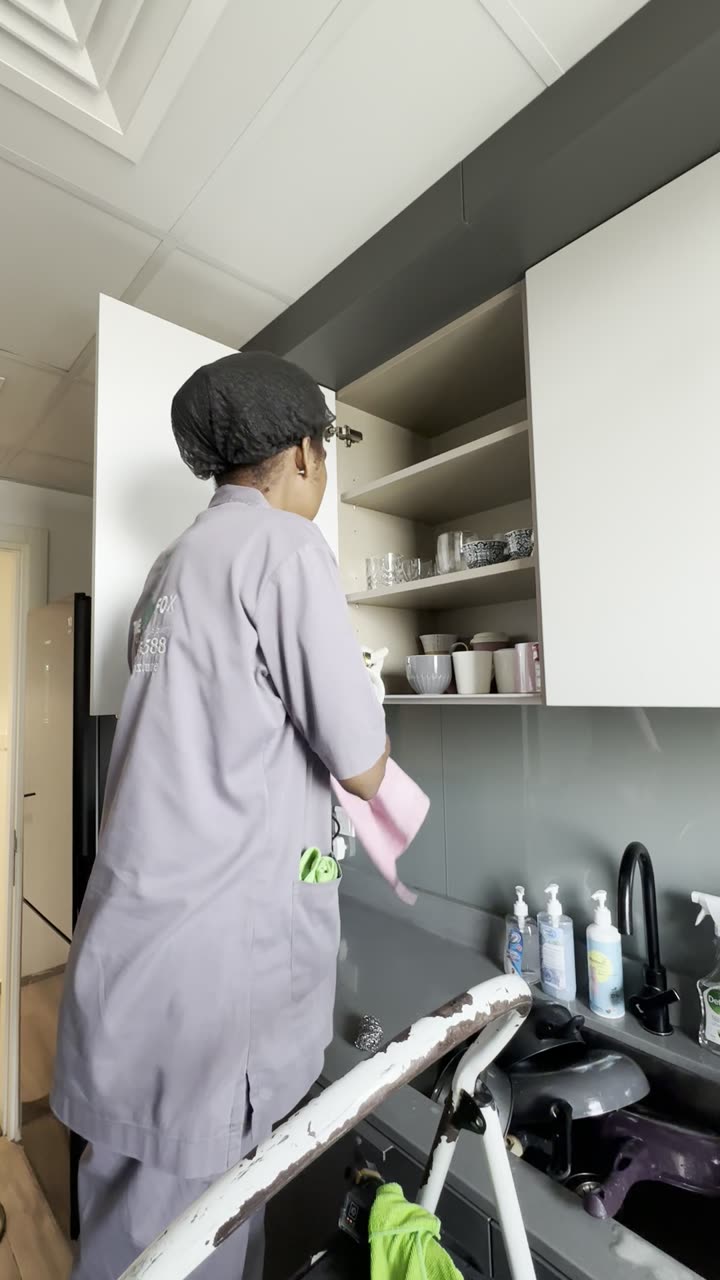
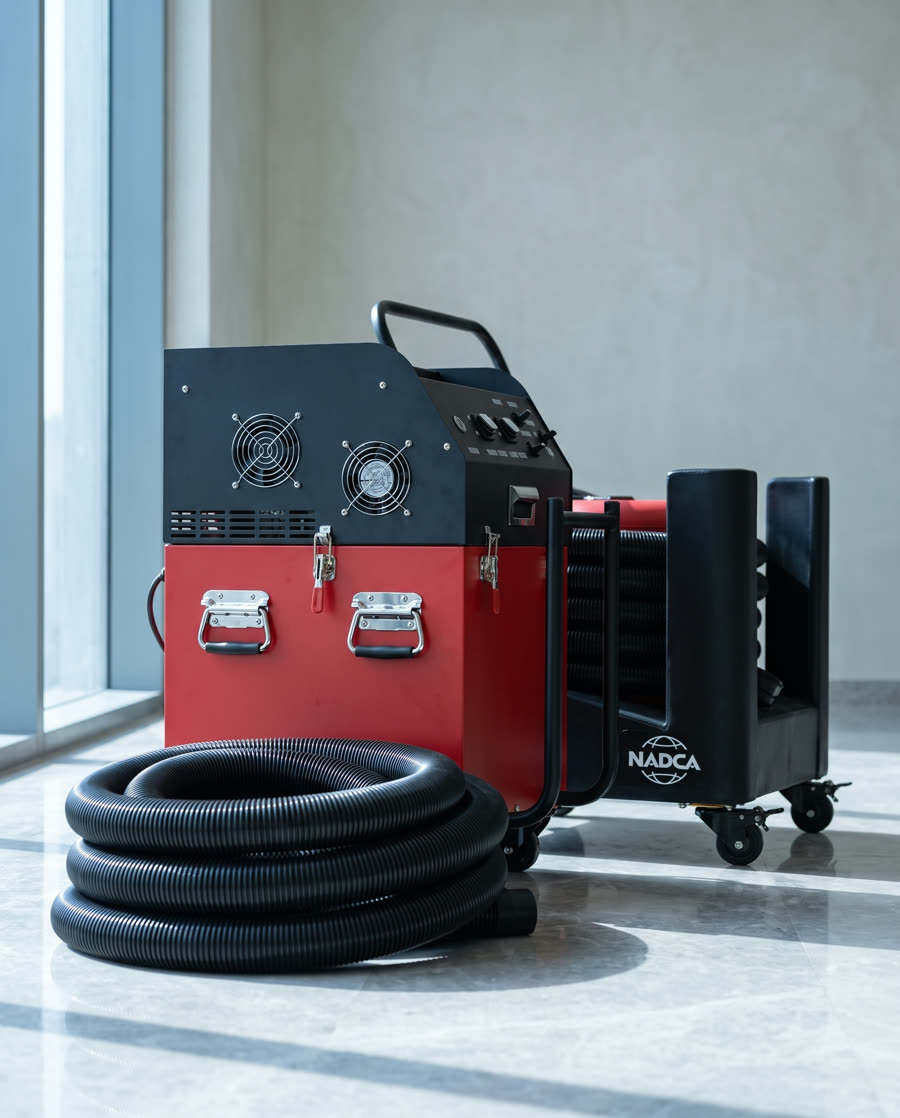
The US Environmental Protection Agency makes the same distinction from the other side. When people book duct cleaning, it advises asking the provider to “clean cooling coils and drain pans” and its checklist for the finished job asks: “Is the coil drain pan completely clean and draining properly?”3. The ducts themselves rarely have anything to do with humidity. If your system needs that kind of clean, our AC cleaning in Dubai covers filter, coil, tray, drain and grilles with our own technician. What we do not do is repair or recharge AC units, replace pipe insulation or fix seals.
Who pays for the rest depends on your contract. Dubai Law No. 26 of 2007, as amended, requires a landlord to hand over a property “in a good condition which allows the Tenant to fully use it”4. How ongoing maintenance is split is normally set out in the tenancy contract and its additional terms, and disagreements go to the Rental Dispute Settlement Centre in Dubai. This is general information, not legal advice. In practice, sending your hygrometer log and photos of the stains or drips to the building management by email is the fastest route to a technician visit.
What happens if you leave it?
Moisture that has nowhere to go ends up in the coldest, least ventilated places: the back of wardrobes on external walls, behind headboards, in the AC tray itself. Dubai Municipality lists “microbiological growth in drip pans, humidifiers, ductwork, coils” among the sources of indoor air contamination it wants buildings to control1.
The World Health Organization’s guidelines on dampness and mould conclude that there is sufficient epidemiological evidence linking damp and mouldy buildings to respiratory symptoms, and recommend preventing persistent dampness and microbial growth rather than treating it afterwards5. That is the reason to fix the cause, not to scrub the symptoms every few weeks. If you already have dark marks around the grilles, our guide to black spots around the AC vent explains how to tell mould from dust and condensation. If the main sign is a smell rather than a reading, start with the seven most common sources of a musty smell.
What is a sensible routine once the humidity is back under control?
Keep the hygrometer where it is and glance at it once a day in summer. Leave the fan on Auto. Pull the filter out every few weeks during the hot months and rinse it if it is grey, and check the drain outlet for water on a humid evening. Dubai Municipality’s own intervals for the professional side are a monthly look at the tray, coils and condensate pipes at least every six months, and an inspection of the system at least every three months1.
When you go away in summer, do not switch the AC off completely. A closed apartment with no cooling and a dew point outside above 24 °C2 is exactly the setting in which wardrobes and soft furnishings take on moisture. If they already have, a home deep clean with the AC unit included deals with the visible results, but the cause still has to be fixed first.